
Pollinator Partnerships Announced with 13 Hudson Valley Farms and Towns
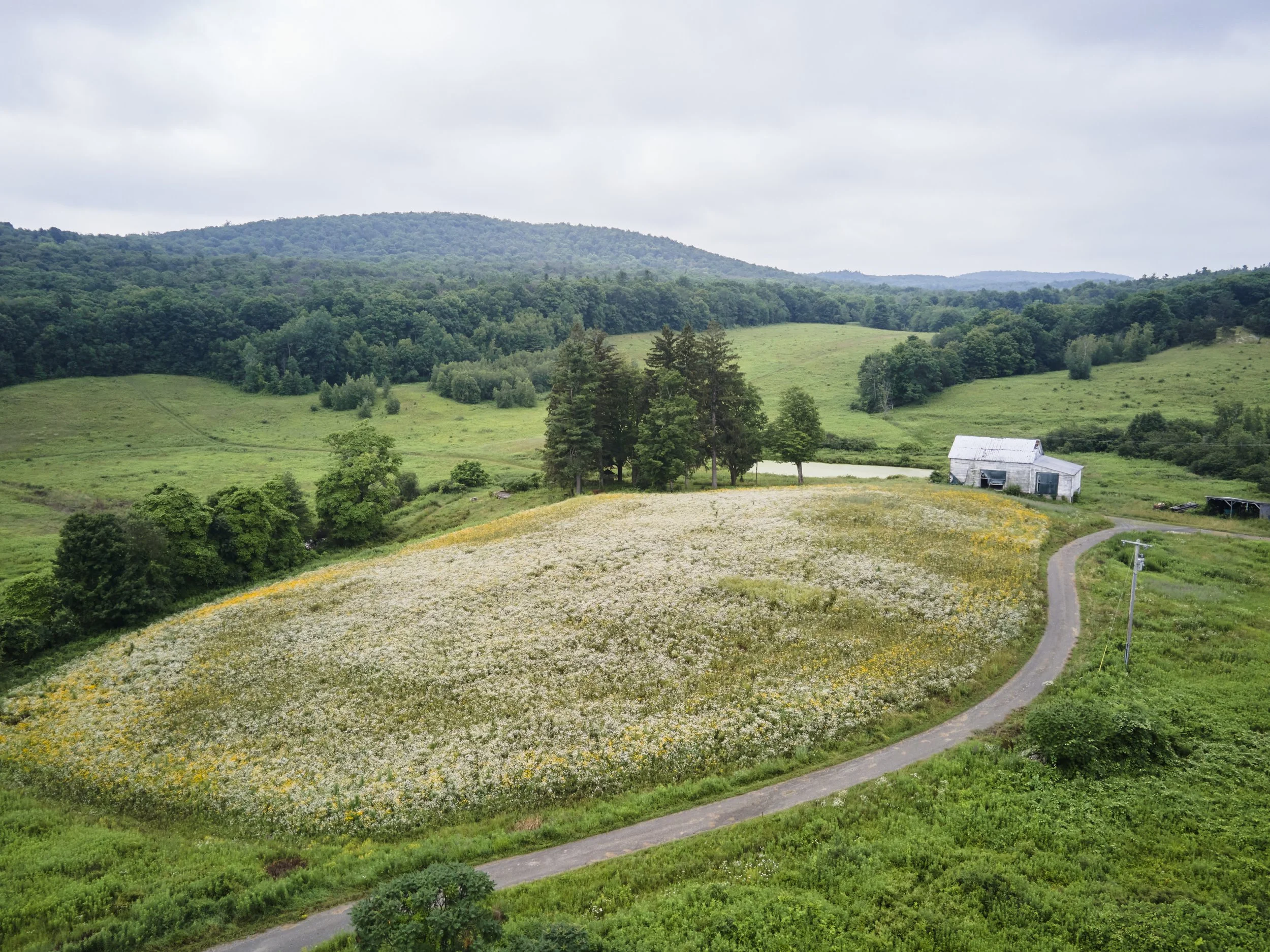
Partners for Climate Action (PCA) is thrilled to announce 13 new partnerships with Hudson Valley farms and municipalities for the creation of pollinator habitat. With up to 60% of New York native pollinators facing extinction due to habitat loss, pesticide use, and other forms of environmental degradation, these new native plant installations will provide a critical resource to dwindling pollinator populations while engaging local communities in hands-on ecological repair.
PCA’s PollinateHV initiative (PollinateHV.org) is a 2025 recipient of a $247,000 award from the New York Pollinator Conservation Fund. The grant supports the installation of large-scale pollinator meadows and native tree plantings on working farms; and small “pocket park” gardens on municipal parks and grounds.
Municipal partners are:
Village of Catskill (Greene County): Two gardens, at the Catskill Fire House and Elliot Park
Town of Kinderhook (Columbia County): Two gardens, at the Valatie Town Hall and Kinderhook Library
Town of New Paltz (Ulster County): Two gardens, both at the Field of Dreams community park
Town of Red Hook (Dutchess County): Two gardens, both at the Red Hook Recreational Park
Village of Rhinebeck (Dutchess County): One garden, near the entrance to the Rhinebeck Farmers’ Market
“We’re so grateful to be able to host a shared space that welcomes native plants, and their pollinators, to our park,” said Laurie Husted, Chair of the Town of Red Hook Conservation Advisory Council. “We hope these micro gardens will help create a buzz around the wondrous relationships among people, plants, and pollinators and the critical role we all can play in habitat conservation, even in small spaces.”
Farm partners are:
Hearty Roots Farm (Red Hook, Dutchess County)
Hudson Valley Seed Company (Accord, Ulster County)
Mead Orchard (Tivoli, Dutchess County)
Prospect Hill Orchard (Milton, Ulster County)
Samascott Orchard (Kinderhook, Columbia County)
Chester Agricultural Center (Chester, Orange County)
Glynwood Center for Regional Food and Farming (Cold Spring, Putnam County)
Hudson Valley Research Laboratory (Highland, Ulster County)
Farm partners will install native wildflower meadows in fall 2026, totaling over five acres of meadow. Three farms will also install native tree and shrub hedgerows, while the Hudson Valley Research Lab will install three species of pollinator-friendly shrubs in a new native orchard at their Highland experimental farm.
“This project is a great example of the intersection of agroecosystems and environmental conservation, and something that we’ve been wanting to invest in for a long time,” said Anna Wallis, Cornell Integrated Pest Management's Fruit IPM Coordinator, who’s leading the project at the Hudson Valley Research Lab. “Farmers and orchardists in our region have long been invested in supporting pollinators, and this funding and expert support will enable them to follow through. Installing plantings at our research station allows us to ground-truth concepts before growers invest in them, while providing space for us to demonstrate this work to the public.”
Farm and municipal plantings will include interpretive signage and online documentation at PollinateHV.org. New planting designs, plant lists, budgets, and instructions will be available in spring 2026 to help Hudson Valley residents support pollinators in their own yards, parks, fields, and farms. Projects will incorporate free training events and volunteer workdays covering pollinator habitat needs, locally native plants for garden and farm settings, site preparation, planting, management, and more. Those interested in participating should join the PCA mailing list at climateactionhv.org.
“We need all hands on deck to address the ongoing crisis of pollinator collapse and native biodiversity loss,” said Avalon Bunge, PCA’s Ecological Projects Manager and grant project lead. “These partnerships represent our biggest opportunity yet to spread the word and engage Hudson Valley communities in direct ecological action while installing native plantings at a scale that can really make a difference.”
All projects are made possible through generous funding from the New York Community Trust, the Office of the New York State Attorney General, and the New York Pollinator Conservation Fund.
